Managing an OR portfolio requires more than product expertise. Cardinal Health’s Erin Mykytyansky shares how relationships, resilience and continuous learning fuel success in modern healthcare sales.
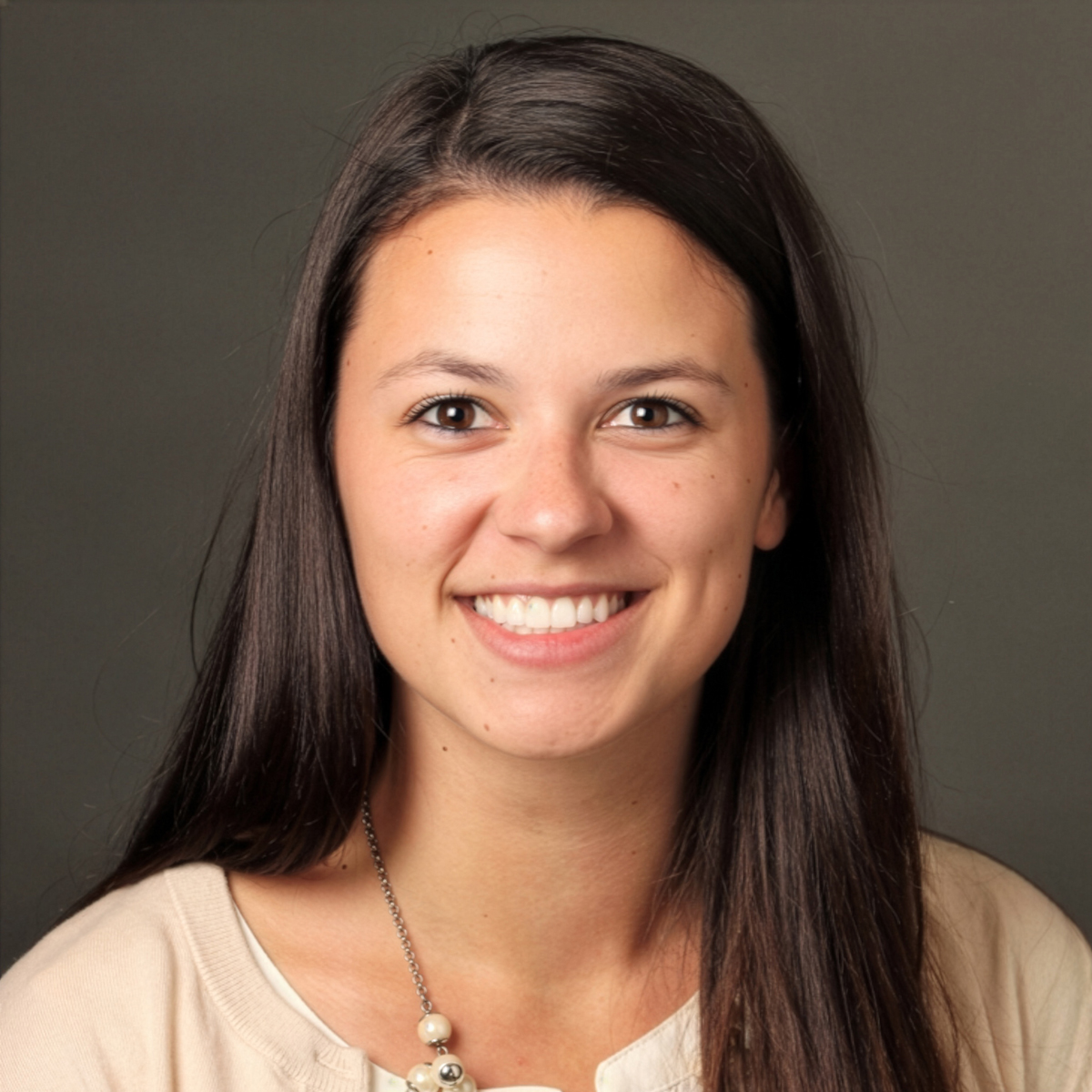
For Erin Mykytyansky, the path into healthcare sales was not a straight line, but a journey shaped by curiosity, mentorship and a desire to improve patient outcomes from a different vantage point.
Today, Mykytyansky serves as an Operating Room Sales Specialist with Cardinal Health’s U.S. Medical Products and Distribution business, managing a $57 million operating room portfolio across 21 hospitals in the New York metropolitan area. Her work spans multiple product categories, including surgical gloves, drapes and gowns, and custom surgical kits.
Her initial thoughts on entering the medical space centered on being a practitioner. While attending Boston College as a biology major, Mykytyansky planned to pursue medical school. That direction shifted during her junior year after discovering a strong interest in marketing. This opened the door to a new possibility – one that combined healthcare with business strategy. Rather than leaving healthcare behind, she sought a role that allowed her to influence patient care indirectly while engaging her growing interest in sales and marketing.
A key influence came from a family connection. At the time, her dad had a friend with a 20-plus year career in medical sales. Mykytyansky was inspired by his journey, and he offered to coach her on next steps to prepare for an eventual career in medical sales.
“He taught me that I didn’t need a specific degree to be successful,” she said, “just a willingness to learn and go after the right opportunities.”
Learning the business from the ground up
Mykytyansky chose a strategic starting point upon graduation: sales operations at Cardinal Health. In operations, she supported operating room sales representatives by analyzing data, managing processes and fulfilling customer requests – work that provided an inside look at the complexities of healthcare supply delivery.
She used the role as a learning platform, networking with sales representatives and joining them in the field to understand customer interactions firsthand. Those efforts led her to become a sales rep with Cardinal Health’s U.S. Medical Products and Distribution business in 2017.
“Each win and each missed opportunity presented a learning experience that continues to influence how I work with my customers today,” she said.
Mykytyansky credits her early operational work with shaping her effectiveness in the field today, particularly when working with procedural kits – an area requiring precision and deep coordination.
“Sales operations instilled a level of attention to detail that continues to influence how I approach my role in the field today,” she said.
That experience now allows her to engage confidently with multiple stakeholders across healthcare organizations and to anticipate downstream impacts before issues arise. Her time in operations also reinforced the importance of staying connected across the organization, as working in the field focused on customers and day-to-day business sometimes felt isolated if she wasn’t actively engaging with her teammates.
Maintaining those connections helps her stay informed and better support customers’ evolving needs. “That foundation also taught me the value of collaboration – delegating work where appropriate and leveraging the expertise of others instead of trying to manage everything independently.”
Although she ultimately chose a non-clinical career path, Mykytyansky said her biology degree remains central to her success.
“Looking back, my biology background still shapes how I sell today. It trained me to ask better questions, understand clinical priorities and respect the rigor behind evidence-based decision-making.”
Navigating complexity
Managing operating room portfolios for some of the nation’s most prestigious healthcare institutions comes with unique pressures – and equally significant opportunities to drive impact. For Mykytyansky, success in these environments depends on understanding that every decision ultimately connects back to patient care.
“Knowing a patient is at the end of every product we offer makes the stakes high in any territory, and working with these organizations raises the bar,” she said. “Success in these complex environments requires understanding of customer needs, as well as how and why decisions are made across clinical, sourcing and sustainability stakeholders.”
Large health systems present challenges that extend far beyond individual facilities. For example, Mykytyansky works with a major New York City health system whose scale amplifies the impact of every operational decision. “When I work with this customer on decisions like implementing a specific product, or changing the type of product they use, it has much larger implications than it would at a standalone facility,” she explained. “Understanding the dynamics of how each hospital operates and layering in sourcing and supply chain management is a critical part of an ever-evolving approach.”
Adaptability is equally essential when supporting institutions operating at the forefront of medical innovation. One hospital in her portfolio focuses heavily on advanced research and treatment for critically ill patients, requiring rapid responsiveness to evolving clinical practices.
“I have learned to be able to act quickly to adapt to improving practices. Quality is always a top priority, but it’s even more paramount when the most critically ill patients are involved,” she said.
Beyond clinical performance, Mykytyansky also helps customers strengthen broader organizational goals, including patient experience and operational outcomes. She works with hospitals to implement solutions that improve the patient experience while supporting recovery and efficiency.
“I can bring products and solutions to the table that enhance patient satisfaction scores, drive better outcomes, shorten hospital stays and decrease chances of re-admission,” she said. Examples include custom, hospital-branded amenity kits designed to improve comfort during admissions and enhanced recovery kits that bundle pre- and post-operative care products. “We’ve found these items can enhance clinical outcomes.”
Sustainability has also emerged as a growing priority among leading health systems. Mykytyansky sees procedural pack customization as a practical way to align operational efficiency with environmental responsibility by improving efficiency and reducing packaging waste.
While complex accounts present ongoing challenges, Mykytyansky points to the COVID-19 pandemic as the most pivotal period of her career. “During the pandemic, I found myself amid a heartbreaking time for New York City healthcare systems, which were some of the hardest hit in the world and incredibly stretched to support those in need,” she recalled. “Everywhere you turned, there was a problem that felt overwhelming. It was a defining period that sharpened my resilience and creativity in ways no other experience could.”
Widespread supply disruptions forced rapid innovation and collaboration. “I learned to think on my feet, be innovative, and build unique solutions through our procedural kitting capabilities,” she said.
Continuous learning and connection drive sales excellence
In today’s high-stakes environment of the operating room, Mykytyansky said trust begins with consistency and accessibility. “Simply put, I show up frequently and consistently,” she said, noting that clinicians and decision-makers know when to expect her onsite and how to reach her. Even small concerns can represent major challenges for surgical teams, making responsiveness essential. She also builds credibility through education, helping customers understand the full range of Cardinal Health solutions and how products can work together across applications. “Trust in the OR isn’t built through relationships alone. It’s built through consistency, responsiveness, and accountability over time.”
For Mykytyansky, consistent performance in healthcare sales is less about individual achievement and more about continuous learning, collaboration and disciplined execution. Those principles have played a central role in earning her multiple Sales Excellence awards during her career with Cardinal Health’s U.S. Medical Products and Distribution business.
At the core of her success is a mindset grounded in observation and adaptability.
“Over the years, I have learned to be a sponge in my environment,” she said. “I lean on my teammates and colleagues in the industry to learn of successes in their worlds that I can implement in my hospitals.”
By staying closely connected with peers across teams, she gains insight into both successful initiatives and emerging challenges. “Healthcare sales is fundamentally a people business, and strong internal relationships are what allow ideas, best practices, and solutions to travel quickly across teams,” she explained.
Maintaining momentum is another defining element of her strategy. Mykytyansky emphasizes proactive engagement with customers and disciplined use of data to uncover opportunities before they become urgent needs.
“Staying one step ahead by keeping projects in motion and maintaining a consistent presence with my customers ensures momentum never stalls,” she said. Regular interaction with both clinical and supply chain stakeholders helps her understand evolving priorities while positioning herself as a trusted resource.
She pairs relationship-building with structured analytics. “I also have a regular cadence of engagement with the tools at my disposal, including customer data, to uncover new opportunities and drive growth,” she said, adding that routine data reviews help ensure no opportunity is overlooked.
Mykytyansky’s commitment to learning has been further reinforced through participation in Cardinal Health’s Sales Leadership Academy and the Operating Room Sales Leadership Council, experiences she credits with reshaping her leadership perspective.
“I’ve learned to never stop networking and learning. If you have stopped learning from others, including the people you lead, you have stopped improving as a leader,” she said. Exposure to peers from different markets broadened her understanding of how diverse challenges can produce innovative solutions. “Some of the most valuable lessons I’ve learned have come from peers in very different markets facing different constraints.”
When evaluating leadership in today’s healthcare sales environment, Mykytyansky believes presence and empathy set top leaders apart.
“A great leader is present and involved with their team consistently,” she said. Leaders who actively engage with field teams and customers build credibility and trust. “A leader who listens to the pain points of the field and works to provide relief is one the field will trust and want to work hard for.”
Looking ahead, she sees technology as a defining factor for the next generation of operating room sales leaders. While healthcare will always remain human-centered, data and analytics are becoming increasingly influential in decision-making.
“What I believe will set the next group of leaders apart will be their ability to adapt to technology’s growing presence in healthcare decision making,” she said. Leveraging data effectively can strengthen both operational efficiency and patient outcomes. “The best sales leaders will find ways to utilize data and artificial intelligence to make product and service recommendations that can be directly tied back to savings and improved patient outcomes.”