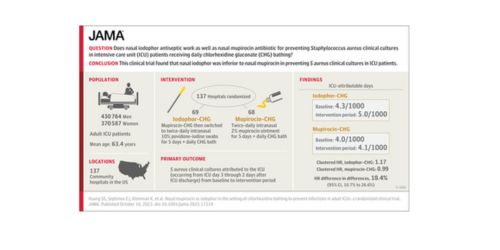
October 11, 2023- A large multi-state study by the Centers for Disease Control and Prevention, Harvard Pilgrim Health Care Institute, HCA Healthcare and the University of California, Irvine has found that a nasal antibiotic ointment, mupirocin, which is currently used daily for intensive care unit (ICU) patients in only one-third of U.S. hospitals, is highly effective at preventing Staphylococcus aureus infections in critically ill patients, outperforming an antiseptic solution.
This study involved more than 800,000 ICU patients in 137 HCA Healthcare hospitals, and built upon an earlier study among these research partners demonstrating that daily bathing with antiseptic chlorhexidine soap plus nasal mupirocin for all ICU patients prevented many bloodstream and other serious infections. This strategy is called “decolonization” because it reduces the amount of bacteria on the body in order to reduce infection risk.
This trial showed a durable benefit from mupirocin. The use of an antibiotic ointment for the past 10 years at HCA Healthcare did not diminish its impact. There was similar persistent clinical benefit even after nearly a decade of continuous ICU use, suggesting that use of chlorhexidine soap and mupirocin had not lost their effect. This is important because widespread antibiotic use can lead to antibiotic resistance in some instances.
Because of the size of the study and the fact that it was conducted at such a wide range of community hospitals, the results are generally believed to be applicable to hospitals across the country.