Sponsored – Midmark
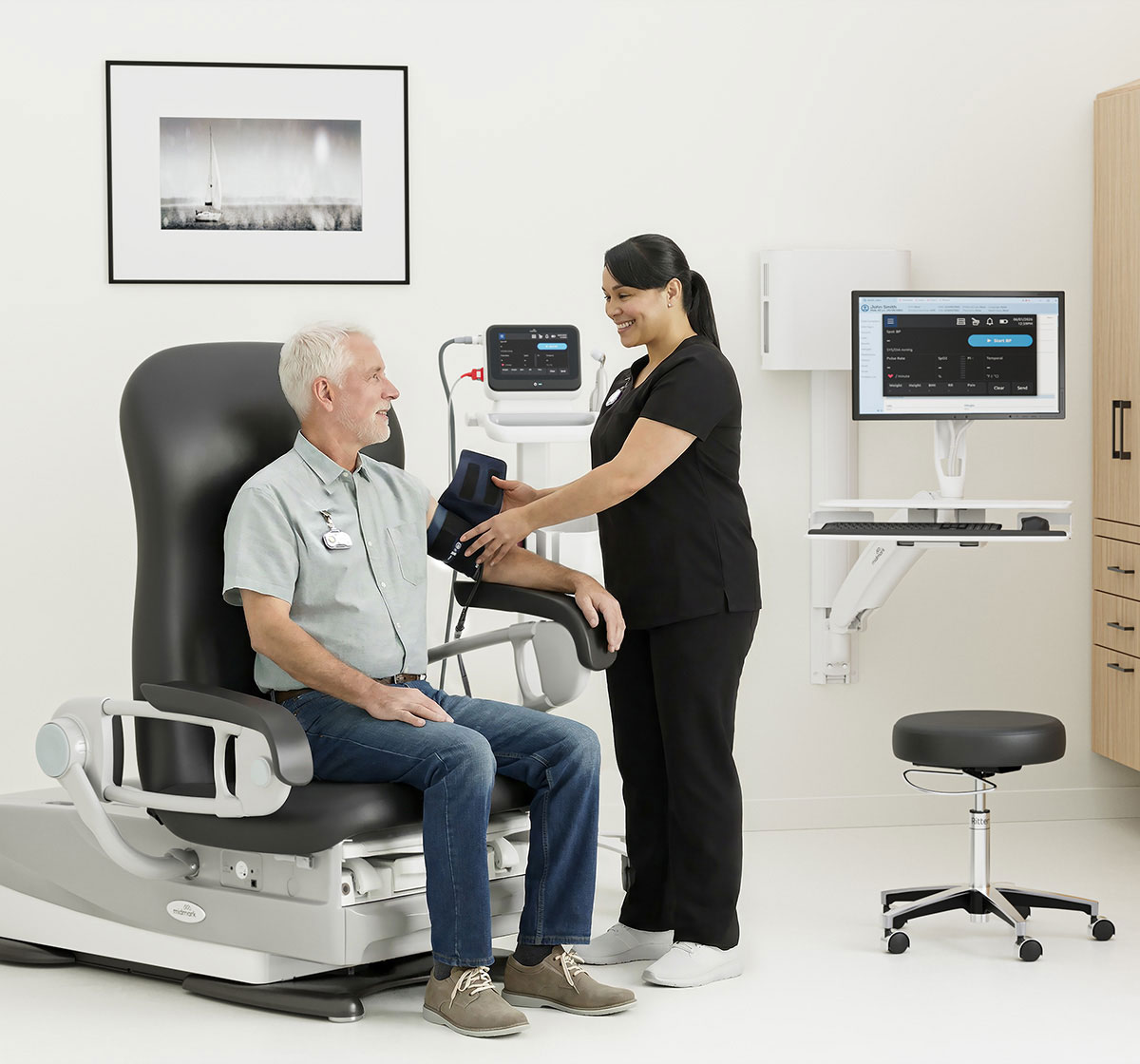
One of the first things that happens during a doctor’s visit is checking the patient’s vital signs to establish a baseline and provide the care team with the information they need for the rest of the patient encounter.
In a recent Repertoire podcast episode, Tracy Timmerman, marketing director of the medical division at Midmark, said because vitals are collected so frequently, it can be easy to think of them as a routine task – but the quality of that process is so important.
“The care team needs to consider whether the patient is positioned appropriately, whether the measurement technique is consistent and whether the results are then documented accurately in the patient record,” she said.
Any variation in positioning for vitals collections can really add up when you’re looking at the number of patients that a physician’s office can see throughout any given day or week. Acquiring vitals is a clinical workflow that includes the patient, caregiver, equipment, exam room and connection to the EMR all working together to ensure accurate collection and improved patient outcomes.
The Midmark 800
The Midmark® 800 Digital Vital Signs device is designed to support accurate, efficient, and connected vital signs acquisition in the ambulatory care environment. It captures blood pressure, temperature, pulse, optional SpO2 and automated respiration rate, as well as height and weight.
“With this device, we really wanted to create more than just a replacement for an existing vital signs device. We wanted to help customers rethink the full process surrounding vital signs acquisition,” Timmerman said.
During development, the team at Midmark focused on three priorities for vital signs acquisition: usability, flexibility, and connectivity. The Midmark® 800 needed to work as a part of the exam room, as opposed to an isolated piece of equipment, which helps to further create a standardized workflow.
The exam room ecosystem
Midmark looks at the exam room as an ecosystem, or interconnected clinical environment, Timmerman said. “The exam chair affects how the patient is positioned, while the location of the vital signs device affects how easily the caregiver can access it, and the workstation affects whether staff can remain near the patient while documenting the encounter.”
It’s all about designing the room so that all of the individual components work together, creating more consistency for the customers, a more coordinated care encounter wherein the environment supports the care being delivered, and reducing unnecessary movement for providers.