By Pete Mercer
NueHealth’s CEO discusses the reasons and goals behind a series of new partnerships.
Earlier this year, NueHealth announced four new partnerships across Missouri and New Jersey, expanding its national footprint with four distinct and diverse partnerships. NueHealth provides physician-aligned management services for ambulatory surgery centers, working with these facilities to improve the efficiency, clinical outcomes and economic performance for their partners.
Repertoire Magazine recently spoke to Michael Sheerin, CEO of NueHealth, about these partnerships, their business intelligence platform and the biggest challenges facing ASCs right now.
Repertoire Magazine: What’s the most exciting thing for you about these new partnerships and how does it play into the overall mission and vision of NueHealth for 2026?
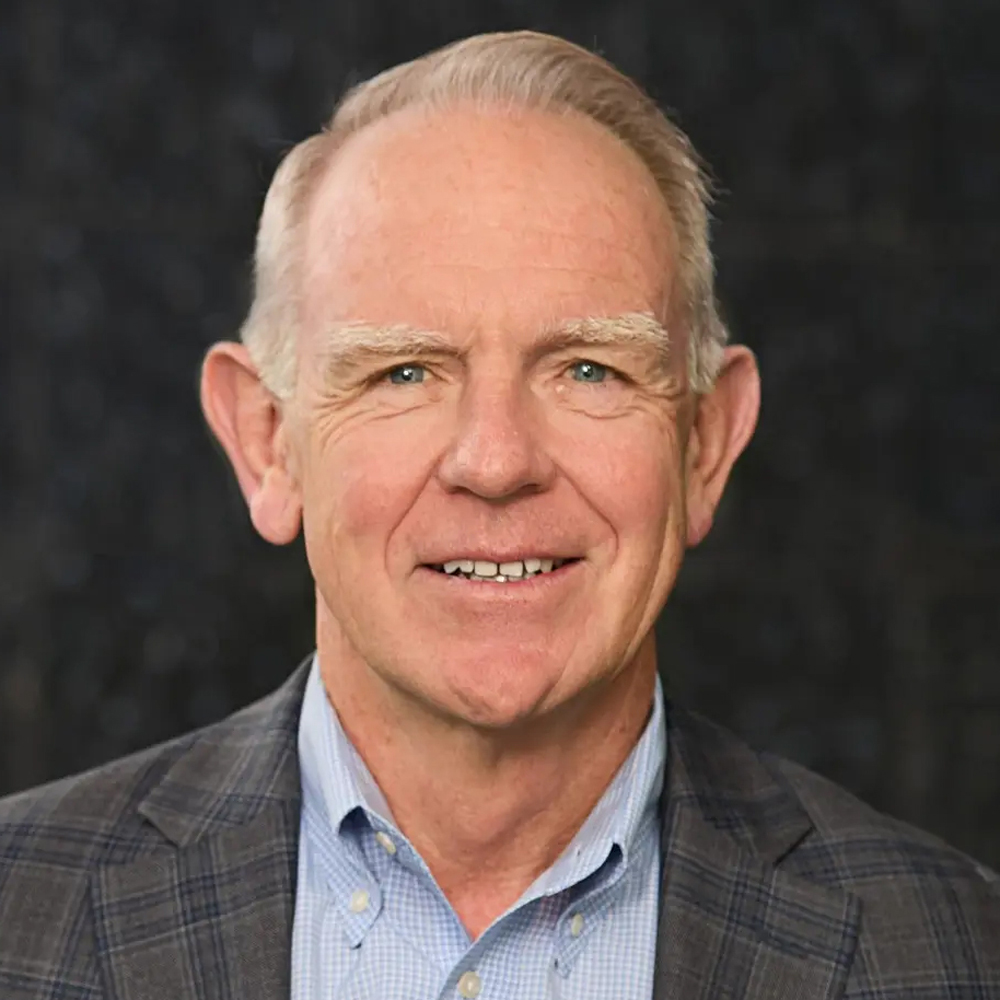
Michael Sheerin: We are focused on growth and value-based care in 2026 and beyond. It’s always exciting to announce a new partnership – let alone four new partnerships. What excites me even more about these deals is the diversity in their deal structure. In one agreement we are managing a center without equity while in another we are manager and minority equity partner. One of the deals is a de novo development and management project, and another is with a major health system partner.
Many of our competitors have a “boilerplate” approach to deal structure that often requires both a management contract and equity in the center. We adopted a philosophy of meeting customers where they are in their ASC journey as long as it still makes financial sense to NueHealth. It’s that diversity and approach that excites me as it illustrates our commitment and ability to adapt to the needs of our partners.
Repertoire: What kind of management services does NueHealth provide?
Sheerin: If the project is a new center, whether “greenfield” or “brownfield,” we offer a full array of development services to include project management, engaging an architect, construction managers, etc. We facilitate syndication documents, financial/cap ex planning, banking, etc.
In addition to new development deals, we offer HR services, policy and procedure manuals, operating agreement(s) and contract completion. NueHealth manages general operations of the ASC; the “blocking and tackling,” licensure readiness, insurance services, payor contracting and revenue cycle management.
In addition to what most might consider standard in the industry, we have invested heavily in robust business analytics focused on managing key performance indicators that are financially, operationally and clinically focused. NueHealth has developed a value-based care platform that enables a surgery center to contract with the payer and take risk for a prospective episodic bundle; a fixed price for the entire episode where we collectively take the risk for the total cost of care. While not for everyone, for the right center and the right group, it’s a nice value add.
Repertoire: What kind of company culture are you looking for in a partnership?
Sheerin: We look for partners aligned in quality and value. Partners that are aligned around best clinical, operational and financial practices. Quality and safety must always “trump” financial gain. We are very interested in our potential partner’s “why.” Our “why” around ASCs is that we believe many patients can receive highest-quality care and have a great experience in a lower cost facility – facilities where the surgeon is in control. That’s the ideal partnership; one based on quality and service. When we have that, financial profitability will follow.
Repertoire: What are the most common challenges facing ASCs today and how does NueHealth work to navigate those challenges?
Sheerin: What we’re seeing is that a lot of ASCs today are struggling with staffing challenges. They’re competing with health systems who often pay a little more and may have better benefit plans. To offset this, we’ve instituted gain sharing programs at many of the centers that we manage where the staff also benefit when the centers perform well financially. This allows the employee to share in the success of the center.

We’re also seeing a lot of surgery centers struggling with rising anesthesia costs. Surgery centers subsidizing anesthesia losses (net of what they bill for services) is becoming more common. We are seeing significant consolidation and PE backed mergers in anesthesia. In certain regions we have let requests for proposals that have creative funding and subsidy models around staffing and anesthesia coverage.
Supply costs also continue to rise, cutting into center margins. Group purchasing agreements are key. Many standalone, self-managed ASCs just don’t have the buying power that others get from GPOs that can pass along the benefits of economies of scale.
Finally, the costs associated with robotic surgery has become challenging for ASCs of late. Many of those coming out of surgical training programs with significant emphasis on robotics struggle with transitioning to ASCs without robotics. The robots and disposable costs associated with a case are very expensive and once again cut into already thin margins. We’ve been focused on creative capital deals with these robotic companies where we can pay down the cost of the robot with volume. The surgeons get what they need, and we also are able to protect the bottom line of the center.
Repertoire: What is the Insights business intelligence platform? How does it help to deliver results?
Sheerin: Most traditional ASC EMRs collect the minimum information needed to provide surgical care. We felt it was important to collect data and have the ability to query multivariate data to not only understand what is happening but develop actionable strategies for improvement. That is the essence of Insights platform. Our analytics help surgery centers understand and take action to improve operational efficiency, profitability, patient satisfaction, surgeon satisfaction, etc.
Repertoire: Is there a strategy for scaling these partnerships, while trying to preserve the local leadership and physician autonomy?
Sheerin: It starts with identifying and aligning around common goals. What are the surgeons looking for? If there’s a health system, what are they looking for? If we can’t establish common ground or alignment, then perhaps we need to walk away from the deal before getting into a “bad marriage.” That’s a tough discipline – nobody wants to walk away from new business. But in the long run it is much easier to never enter a misaligned partnership than to get out of it later.
Some partnerships start out great, but the players change over time. When new leaders come in, sometimes the priorities change. We need to be OK with recognizing when this is the case making a change if we don’t have the right fit. Surgeon autonomy begins with them having control over their environment to ensure safe and highest quality care. This includes the use of protocols and evidence-based pathways. Our strategy for partnerships and surgeon autonomy focuses on goal alignment, recognizing when partners are not aligned and focusing on safety, quality and satisfaction.