SPONSORED: Clorox Purell ProCare
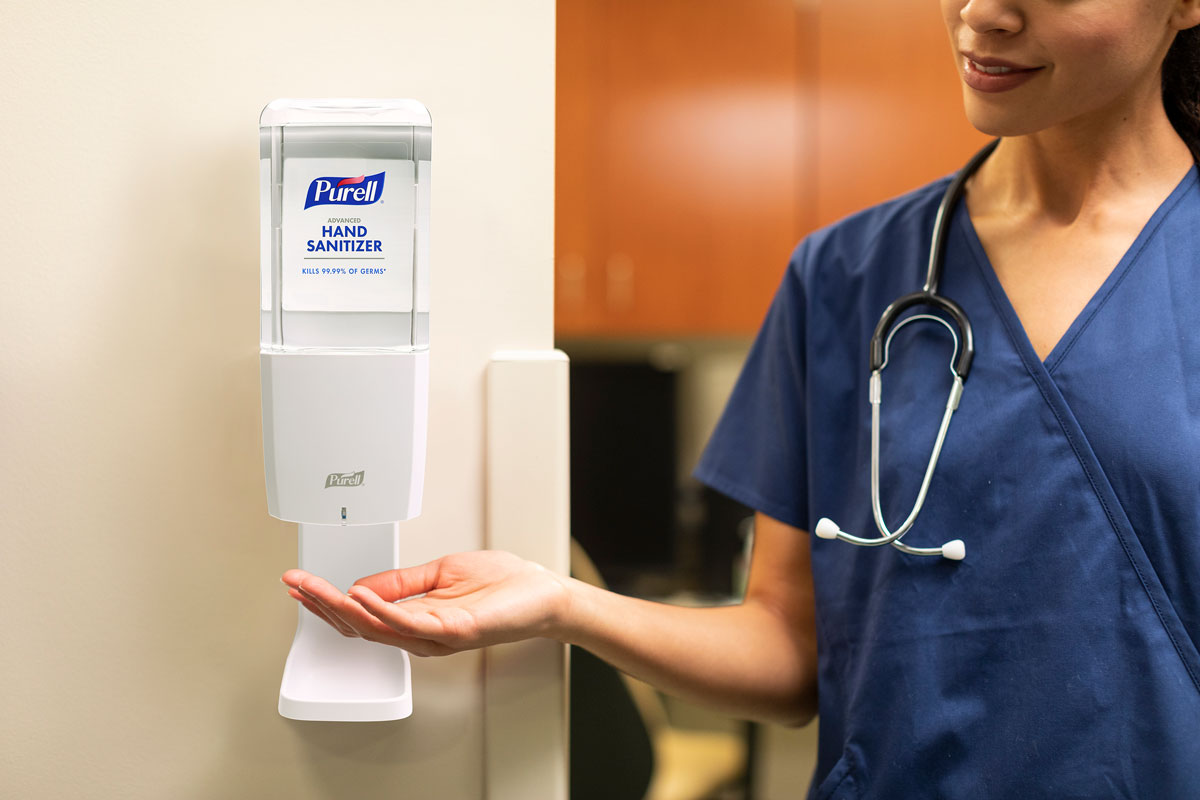
Instructions for Use (IFUs) are currently a hot topic in infection prevention circles. While IFUs serve a critical function by ensuring products are used safely and effectively, healthcare decision makers are increasingly scrutinizing whether manufacturer recommendations align with real-world clinical practice and evolving
evidence-based guidance.
This conversation is particularly relevant for alcohol-based hand sanitizers (ABHS), where a key question is emerging: does the amount of sanitizer healthcare workers (HCWs) actually receive match the amount required to achieve the efficacy demonstrated in testing? Compounding the issue, the dose needed to effectively sanitize HCW hands is rarely included on a product label. Did you know that different brands of hand sanitizer, even those with the same level of alcohol, can reduce different amounts of bacteria on hands?
Look Beyond the Label
When evaluating hand sanitizers, healthcare decision makers should ask three important questions, which can be easily framed with “the 3D’s”:
- Data: Has the FDA required efficacy been demonstrated on skin?
- Dose: What volume of product was used to achieve those results?
- Delivery: Can the dispenser consistently deliver that dose?
Answers to the first two questions should come from the manufacturer and be based on one of two required Food and Drug Administration (FDA) efficacy tests for hand sanitizers. The Healthcare Personnel Hand Wash Test is the on-hands (in vivo) test that measures how effectively sanitizers reduce bacteria on human skin, not in a test tube.1,2
Once you have this data, the second question to ask is how much product was used to achieve those results. Like under-dosing a medication will not deliver the intended clinical effect, using too little sanitizer may not achieve the bacterial reduction demonstrated in testing. Studies consistently show that application volume is a primary driver of ABHS efficacy. Lower application volumes can leave more germs on hands.1, 2
The most overlooked question may also be the most important: can the dispenser reliably deliver the dose required to achieve those efficacy results? A recent study of five leading U.S. foam sanitizer dispensing systems found substantial differences in both average output and dosing consistency. This is important because if dispensers do not consistently deliver an adequate volume, HCWs may not receive the dose needed to achieve the germ kill expected.3
What Really Drives Hand Sanitizer Efficacy
A common misconception is that higher alcohol concentrations automatically mean better performance. Research has repeatedly shown that this is not the case and that hand sanitizer performance depends heavily on formulation. In fact, studies comparing products with 60% to 90% alcohol found no meaningful relationship between concentration alone and antimicrobial efficacy.1
Likewise, product format alone, whether foam or gel, does not determine efficacy. Rather, formulation quality and the amount applied to the hands have a much greater influence on performance. Well-formulated products can meet FDA efficacy standards at realistic in-use volumes, while others fail despite higher alcohol concentrations or simply lower applied doses.1,2
The key takeaway is that IFUs provide an important framework for evaluating hand sanitizers against. Infection control, supply chain and value analysis stakeholders should understand the formulation, the dose required to achieve the stated efficacy, and whether the sanitizer dispenser can consistently deliver that dose in practice. Looking at all three factors helps provide a more complete understanding of both clinical performance and overall value of their hand hygiene program.3,1
1. Formulation Matters, AJIC: Edmonds SL, Macinga DR, Mays-Suko P, et al. Comparative efficacy of commercially available alcohol-based hand rubs and World Health Organization-recommended hand rubs: formulation matters. Am J Infect Control. 2012;40(6):521-525
2. Real World Dose, ICHE: Macinga et al. Efficacy of novel alcohol-based hand rub products at typical in-use volumes. Infect Control Hosp Epidemiol. 2013;34:299-301.
3. Dosing Consistency, ID Week Poster: Arbogast JW, Smith NM, Bansaghi S, et al. Dosing matters: consistency analysis of touch-free automatic hand hygiene dispensers. Poster presented at: IDWeek 2023; October 12, 2023; Boston, MA.