Infection preventionist shares her career journey and what led her to be recognized nationally for her clinical accomplishments.
By Jenna Hughes
Each day, approximately one in 31 U.S. patients and 1 in 43 nursing home residents contracts at least one infection in association with their healthcare, according to the Centers for Disease Control and Prevention (CDC); highlighting the need for improvements in patient care practices across facilities.
Infection prevention (IP) is a crucial step in the healthcare delivery continuum which aims to break the chain of infection within facilities through coordinated clinical activities, and is designed to stop healthcare-associated infections (HAIs) from spreading.
IP is especially important in long-term and post-acute care settings to ensure resident safety, quality of life and emotional well-being. As a result, many long-term and post-acute care facilities have begun implementing infection prevention protocols to reduce the risk of HAIs and protect their residents and staff.
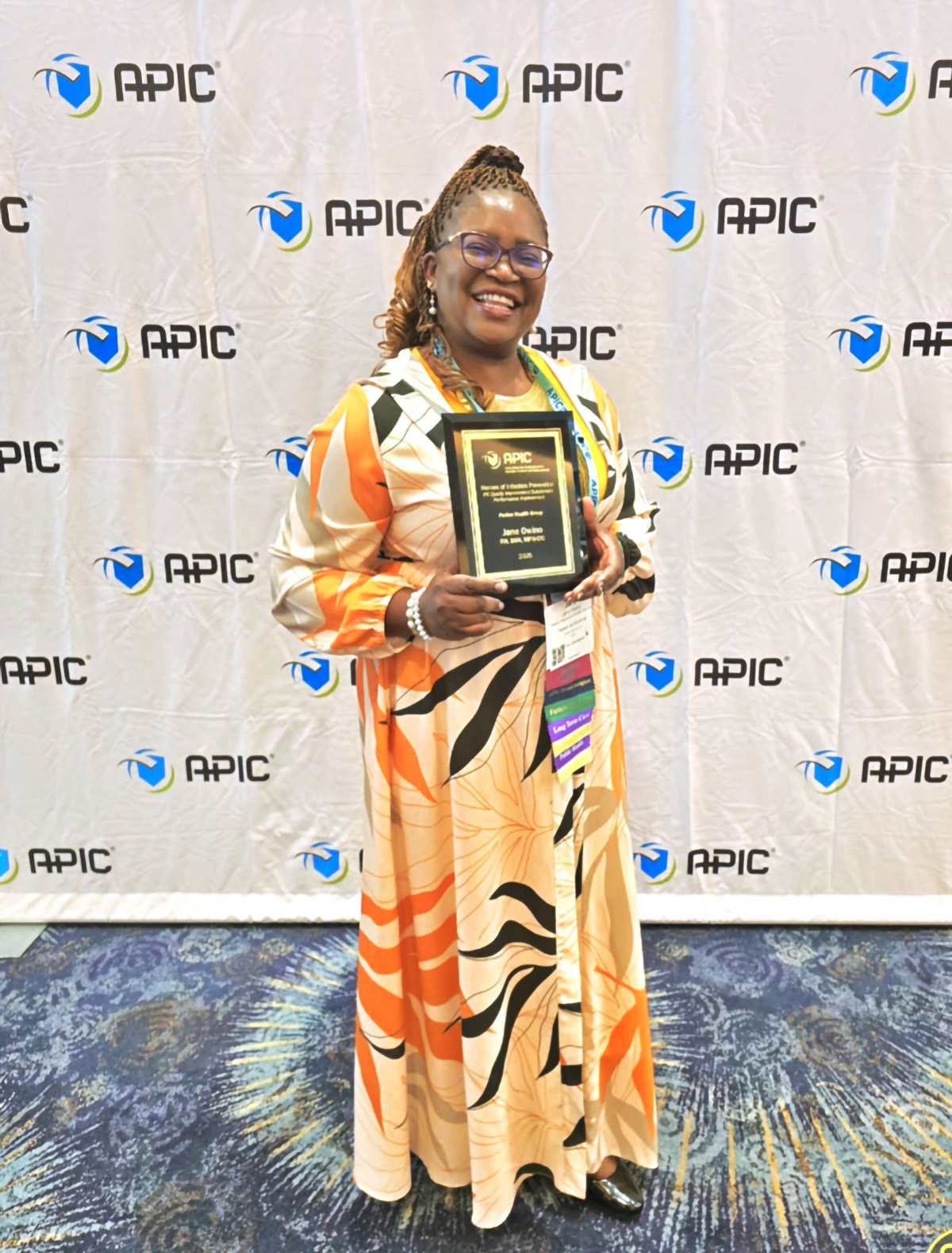
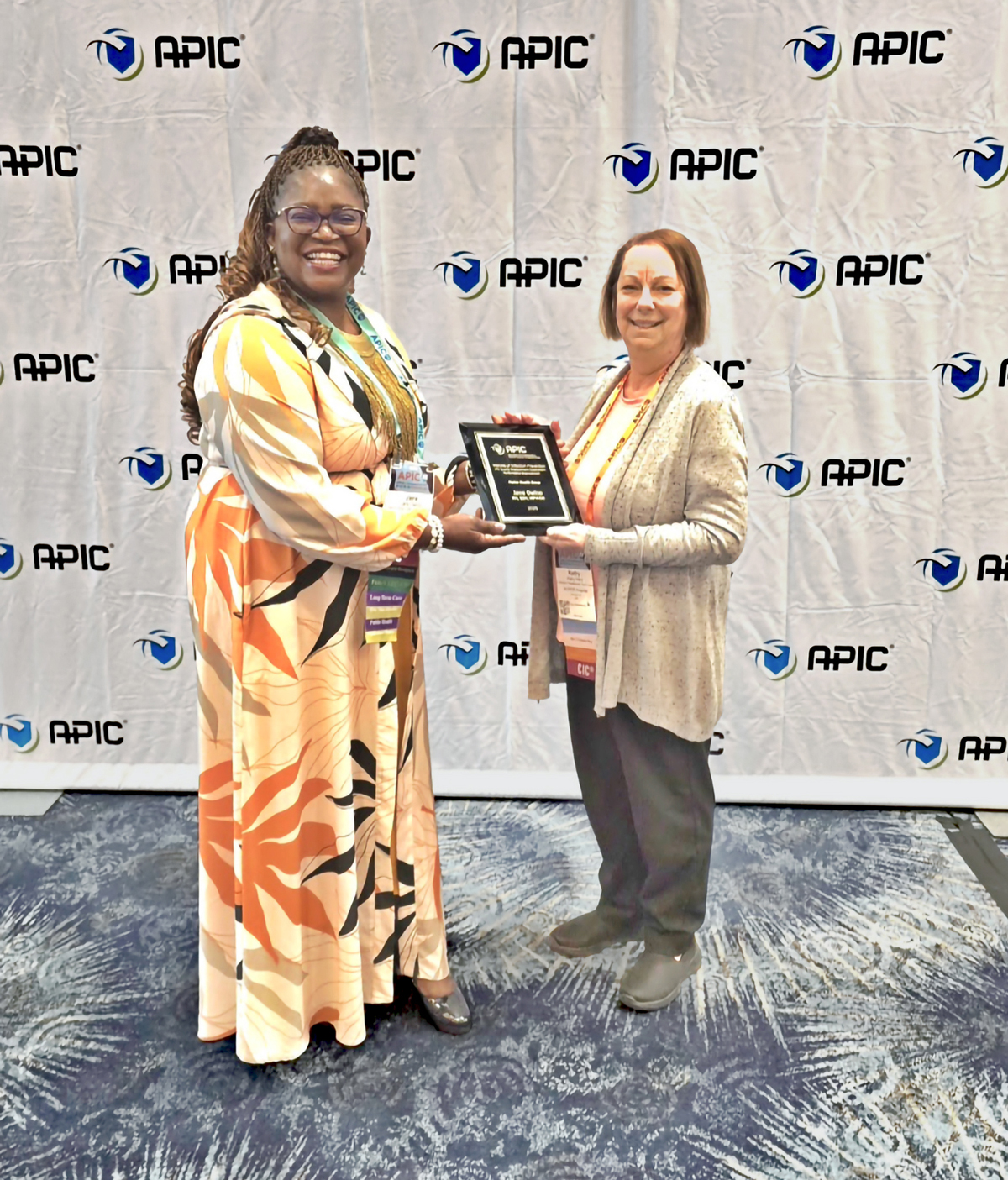
At the forefront of these efforts is Clinical Nurse Manager and Infection Preventionist Jane Owino, RN, BSN, MPH-CIC, of Parker Health Group in New Jersey. Owino was recognized for having successfully reduced infection risk for patients across her clinical practice.
Owino was a recipient of the 2025 Association for Professionals in Infection Control and Epidemiology’s (APIC) Heroes of Infection Prevention Award in the Infection Prevention and Control (IPC) Quality Improvement Category. Each year, APIC recognizes two members and/or their IPC teams for their IP efforts.
“Infection preventionists have many responsibilities within the clinical setting,” said Owino. “In my role, I work among other clinical managers to participate in the entire clinical operation of my facility’s healthcare community,” she said.
Owino serves on the clinical leadership team in her long-term care (LTC) community while also emphasizing a core focus on IPC. In her dual role, Owino oversees daily IPC clinical operations and ensures that infection prevention practices are implemented effectively across all care settings – while at the same time collaborating closely with interdisciplinary healthcare teams to promote resident safety, staff education, compliance with regulatory standards and continuous quality improvement.
“An individualized, holistic patient care approach is often linked to successful infection prevention,” said Owino. “If a resident falls, this type of incident should not exclude the input of the infection preventionist, because it is possible that the cause of the fall is an infection that may be beginning to crop in, for example. We as IPs must look at clinical problem solving collectively to come up with the best solutions for the resident.”
Implementing infection prevention and control
A key milestone for Owino’s journey to the Heroes of Infection Prevention Award was Parker Health Group’s adoption of the Minnesota Antimicrobial Stewardship Data Collection Tool in 2022, which enabled consistent month-by-month microbe data tracking and reporting across the health system’s stewardship committees.
“Since 2021, our community teams have been building a strong foundation for antimicrobial stewardship. With organizational leadership support, we’ve strengthened all seven elements outlined in the CDC’s core elements for antimicrobial stewardship in nursing homes,” said Owino. “This data-driven approach has improved transparency, accountability and informed our clinical decisions for better resident outcomes.”
Owino’s personal interest in IP began in 2002, when she transitioned from a nurse manager role in a medical-surgical unit in Kenya to a position in public health working for humanitarian organizations in South Sudan.
“From 2002 to 2010, I held several leadership positions – ranging from health program manager to program specialist – working with in-country teams to develop proposals and secure funding for HIV, tuberculosis and malaria prevention programs across Kenya and South Sudan,” said Owino. “During this time, I had the privilege to collaborate with NGOs, CBOs, government agencies and international partners, fostering strong public health networks.”
Owino also had the opportunity to co-chair the South Sudan Health NGO Network in 2006 through GOAL- Ireland, an international humanitarian response agency, in partnership with World Relief, Tearfund and UNICEF; supported the meningitis outbreak response in the Bahr el Ghazal region (South Sudan, 2005) under The United Nations Development Program (UNDP); and lead the development of the first Indoor Residual Spraying Training Manual for malaria control at Research Triangle Institute International (RTI) in 2010, which was later adopted across 14 African countries.
“Supporting the meningitis response in South Sudan was my first hands-on experience in outbreak management, which solidified my passion for infection control in resource-limited settings,” said Owino. “Meningitis can spread very quickly in a short period of time, and so many patients contracted the disease during the 2005 outbreak that we had to rapidly train local healthcare personnel to be able to provide immunizations quickly and effectively. When the vaccines arrived, these same healthcare personnel had to then reach out to each village’s population, because we had to perform a mass immunization of thousands of villages to combat the outbreak.”
Owino calls on her former experience in international public health and infection prevention each day as she continues her nursing and IP career in the U.S.
“These experiences deepened my commitment to infection prevention and control and shaped my professional journey when I later relocated to New Jersey,” said Owino. “What I learned early in my career journey provided the backbone to my knowledge and passion for IP and has been fueled into the roles I carry now.”
IP in long-term care
Long-term care residents, like patients in acute-care hospitals, are at an elevated risk of acquiring healthcare-associated infections once admitted to a facility.
Infection prevention protocol is especially critical in long-term care settings because residents often have multiple comorbidities and weakened immune systems, making them more vulnerable to potential infections. Residents also often live in close quarters in LTC facilities, making disease transmission of increased concern.
“Strong IPC strategies directly impact residents’ quality of life, safety and dignity,” said Owino. “It not only applies scientific problem-solving: IPC involves identifying patterns, investigating outbreaks and implementing evidence-based interventions, but also enhances patient quality of life by preventing infections to help residents remain healthy and engaged.”
Infection prevention in long-term care can vary significantly in comparison to acute-care settings due to differing patient populations, resources and facility types.
“In long-term care, infection prevention is primarily nurse-led – with the nurses serving as the cornerstone of IPC activities,” said Owino. “Unlike hospitals, LTC settings are both healthcare facilities and a home for its residents, requiring a more personalized and continuous approach.”
Examples of nurse-driven IPC responsibilities, said Owino, include patient admission and immunization management, ongoing clinical surveillance, daily IPC enforcement, environmental oversight, shift ‘huddles’ where nurses conduct meetings for educational moments and micro-learning and ensuring that IPC principles are integrated into a facility’s daily routines (and not as separate initiatives.)
“We use ongoing education and microlearning sessions to keep IPC practices top-of-mind for staff and encourage accountability,” said Owino. “Recognizing staff for their contributions publicly also helps sustain enthusiasm and reinforces the idea that infection prevention is everyone on the team’s responsibility.”
“Staff engagement in IPC programs begin with education, ownership and recognition. We foster a culture where every team member – clinical and non-clinical – understands their role in protecting residents,” said Owino. “Ongoing feedback, visibility of infection data and celebrating team successes have been key motivators to maintaining IP protocol.”
Overcoming obstacles to IP
IP and outbreak management is an ongoing, evolving practice within long-term care facilities, requiring staff and patient education and the constant re-evaluation of current practices to be executed properly.
There can be, however, numerous obstacles to implementing infection prevention in long-term care, and challenges include staffing shortages and role overlap, limited diagnostic stewardship, time constraints and competing clinical priorities.
“Limited diagnostic stewardship is an ongoing issue for many staff members in long-term care,” said Owino. “For example, if a doctor assumes that a certain patient may have a urinary tract infection (UTI), we as IPs have had to put in place certain steps to ensure that we are arriving at that potential diagnosis (or that we are ruling out other diagnoses) using evidence-based care.”
Instead of a healthcare professional assuming that a patient has a UTI and diagnosing it without further testing, diagnostic stewardship makes sure doctors are thorough with their diagnoses – such as ordering testing like a white blood count (WBC) for a suspected bladder infection to find out if a resident has elevated WBCs or not before they are administered antibiotics.
“We must make sure as infection preventionists that we go further – running blood work, following up with an assessment and performing proper follow-up care with each and every patient,” said Owino. “We as long-term care staff must continually ask ourselves, are we really treating what we need to treat? Or are we just treating?”
Despite inherent challenges to IP protocol, Owino and her team have demonstrated exceptional leadership and innovation, overcoming many obstacles to prevent HAIs in long-term care on the journey to becoming a recipient of the APIC Award.
To provide expert patient care, infection preventionists must focus on treating patients in a constantly changing clinical environment, which requires a more comprehensive look at each patient’s specific condition, comorbidities and personal needs.
To address this, Parker Health Group has integrated a culture of transformation for long-term care residents into its facilities based on Eden Philosophy, which approaches each patient as an individual and considers each resident beyond their clinical needs.
Eden Philosophy aims to view patients holistically, considering their emotional and physical wellbeing as inherently linked by addressing loneliness, boredom and other challenges in the transition to long-term care.
“In long-term care, a patient might be losing cognitive and functional ability due to Alzheimer’s and dementia, but who they were before they entered LTC does not disappear once they are going through an illness,” said Owino. “As a Certified Eden Trainer, I teach my staff that Eden Philosophy recognizes the identity of an individual before they were diagnosed with a disease, and that we all must treat all residents with that in mind – maintaining their natural routines and an inherent respect for each resident’s identity.”
Eden Philosophy aims to address some of the inherent challenges in long-term healthcare by promoting person-directed care in terms of meaning and patient choice.
Becoming an IP hero
While infection prevention achievements are often highlighted in acute-care and hospital settings, long-term care facilities play an equally important role in the prevention of HAIs and deserve equal support and recognition, said Owino.
“Professionally, APIC’s recognition has fueled my passion to continue advancing IPC initiatives,” said Owino. “It reaffirmed that with dedication and collaboration, LTC nurses can make significant contributions to infection prevention at both the local and national levels.”
For Owino, being awarded the Heroes of Infection Prevention Award is affirmation that long-term care nurses, too, can excel in the clinical setting by elevating infection prevention for the enhancement of LTC resident safety.
“This recognition came to me as a surprise, because at the time, I had been trying to find grounding in what I do for my career,” said Owino. “I was motivated to apply for the Heroes of Infection Control as I was reading through the awards that other nurse preventionists had received. I realized then that there was so much that we had done at our own facility as a team in long-term care for antimicrobial stewardship.”
Owino encourages all nurses and clinical staff to apply for awards like APIC’s, and to speak up at their own practice when they accomplish something in order to gain more recognition for hardworking providers across the post-acute sector.
“We as clinical staff must encourage and empower LTC nurses in our workplaces and create a space for them to have a voice and speak up for IP,” said Owino.
Fueling personal drive and future growth
Owino has also gained meaningful personal validation and a deeper appreciation for her career in the process of applying for and receiving the Heroes of Infection Prevention Award.
“Being given opportunities such as this one to write about my professional journey is profoundly rewarding and fuels personal drive into what I do,” said Owino. “It is also a living example for my two daughters and my son. One of my children once said, ‘If Mommy can do it, we can do it,’ so being a role model in my career to my children is deeply fulfilling as a mother.”
Building on these achievements going forward, Owino recognizes that some of the biggest opportunities for change toward better infection prevention in post-acute care overall are empowering staff through education and habit-building to sustain infection control practices, strengthening diagnostic stewardship through collaboration with prescribers and leveraging technology and data for surveillance and feedback to drive continuous improvement.
“My guidance for other organizations looking to implement infection prevention protocols is to start by building a strong foundation of education and culture,” said Owino. “It is important to engage all levels of staff early, establish clear communication channels and ensure leadership commitment. Then, begin to develop policies aligned with CDC and Centers for Medicare and Medicaid Services (CMS) guidelines and implement consistent surveillance tools and track measurable outcomes.”
“Most importantly,” said Owino, “Celebrate small wins in IP with your clinical team to build momentum – because infection prevention is not just a program; it’s a continuous journey of improvement and shared accountability.”