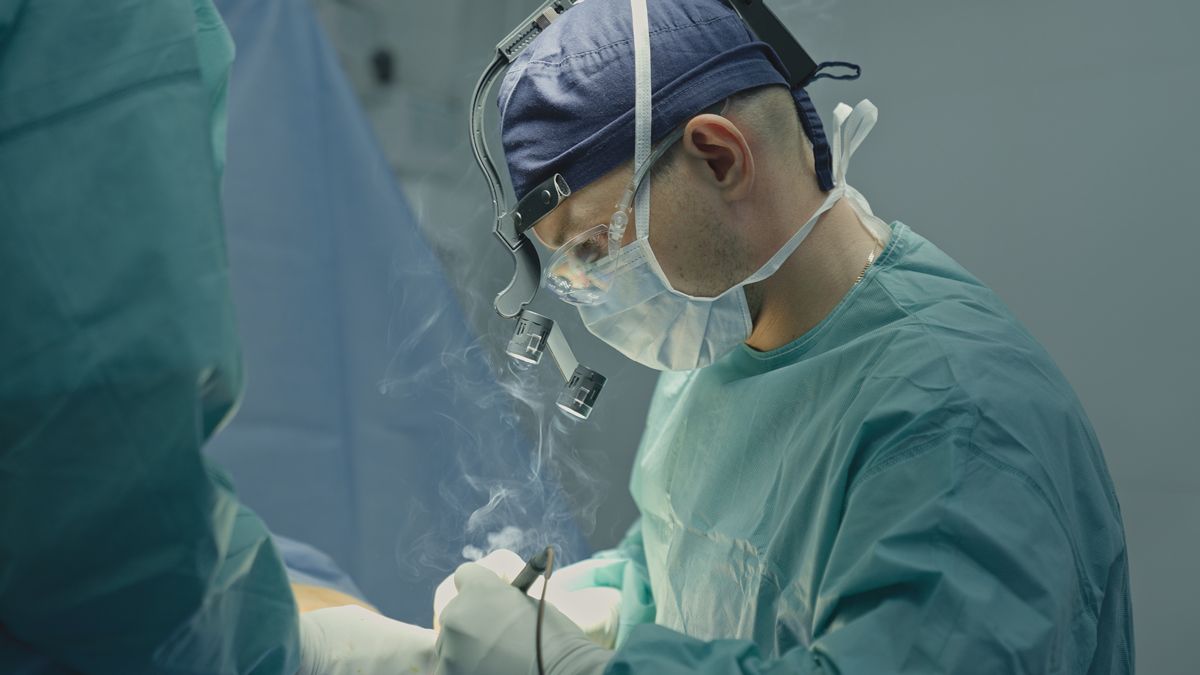
Growing awareness, national programs and state legislation are driving momentum to eliminate surgical smoke and better protect perioperative teams.
Surgical smoke is the by-product of using electrocautery, lasers and ultrasonic devices on human tissues in surgery – which, if inhaled, results in harmful health impacts for healthcare professionals working in the operating room (OR).
Each year, an estimated 500,000 workers, including surgeons, nurses, anesthesiologists and surgical technologists are exposed to laser or electrosurgical smoke, according to the Occupational Safety and Health Administration (OSHA). Perioperative nurses also report twice as many respiratory issues as compared to the general population due to surgical smoke, according to the Association of periOperative Registered Nurses (AORN).
The incomplete cauterization of tissues can create toxic gases, released during surgery in the form of surgical smoke. Roughly 150 different chemicals have been identified in surgical smoke, according to AORN, in addition to bio-aerosols and live and dead cellular material.
“Surgical smoke is the gaseous, visible and malodorous byproduct that is produced when heat-generating surgical energy devices, such as electrocautery, are used on tissue during an operative or other invasive procedure,” said AORN CEO and Executive Director David Wyatt, PhD, RN, NEA-BC, CNOR, FAORN, FAAN. “This surgical smoke can contain harmful chemicals such as benzene and toluene, lung-damaging fine and ultrafine particles, and potentially biohazardous materials.”
The most common physical symptoms of surgical smoke exposure includes head and throat pain, coughing, eye tearing, eye irritation and mucosal diseases, according to the National Institutes of Health (NIH).
“Operating room staff members who are exposed to surgical smoke could experience respiratory issues such as coughing or throat irritation, burning eyes, headaches and nausea,” said Dr. Wyatt. “Long-term effects of chemical and particulate exposure from surgical smoke could include chronic bronchitis, asthma or other more serious lung issues.”
AORN’s mission is to promote safety and optimal outcomes for patients undergoing operative and other invasive procedures and providing a safe and healthy workplace free of surgical smoke for all perioperative team members.
AORN recognition and programs
Healthcare staff and patients both benefit from a healthcare environment free of surgical smoke.
For healthcare professionals, eliminating surgical smoke exposure decreases potential health impacts post-surgery and increases visibility during laparoscopic procedures. For patients, it prevents smoke absorption by red blood cells and reduces the potential for high carbon monoxide levels in the body’s peritoneal cavity.
To encourage hospitals and health system’s efforts to protect their staff and patients from the hazards of surgical smoke, AORN has developed educational programs and an award recognizing excellence in its effective management.
The AORN Center of Excellence (COE) in Surgical Safety: Smoke Evacuation Program is a comprehensive surgical smoke-free recognition program for facilities wanting to ensure a smoke-free healthcare environment. AORN has also partnered with Medtronic, through the AORN Foundation, to create a comprehensive Surgical Smoke-Free Recognition Program known as the AORN Go Clear™ Award, which recognizes healthcare facilities committed to a surgical smoke-free environment.
“Since the program’s launch in 2016, the COE: Smoke Evacuation Program and Go Clear Award™ has over 50,000 perioperative staff members and 1,300-plus facilities globally enrolled,” said Dr. Wyatt. “Over 500 facilities are recognized with the Go Clear Award which has supported legislation efforts in the US, displaying the importance and feasibility of implementing smoke evacuation practices in large, small, urban and rural facilities.”
The AORN Go Clear Award designation is rated on facilities’ education performance, smoke evacuation compliance and ensuring facilities have sufficient smoke evacuators and accessories. The program is designed for any facility that wants to improve patient and workplace safety and be recognized for their commitment to a surgical smoke-free environment.
“AORN provides a comprehensive suite of resources designed to help perioperative teams understand the hazards of surgical smoke and adopt safe, evidence-based evacuation practices,” said Dr. Wyatt. “These resources are a core component of the Go Clear Award and the Center of Excellence in Surgical Safety: Smoke Evacuation Program.”
Components of the program include evidence-based online education modules, a program manual and step-by-step guidance, gap analysis and compliance auditing tools, product evaluation resources, evidence summaries and guidelines and on-demand advocacy and support resources for the elimination of surgical smoke.
“Hospitals and surgical teams are responding positively to the program’s educational initiatives, and we’re seeing a clear shift in both awareness and day-to-day practices,” said Dr. Wyatt. “Many facilities complete the Go Clear Award process within just a few months, and most describe it as a highly achievable initiative that delivers immediate safety benefits for staff, patients and the facility.”
Following the completion of the education portion of the program, implementation of smoke evacuation for six months for all procedures that generate smoke and completion of post-testing and compliance auditing, facilities may apply for the recognition award.
“The combination of education, clear expectations and evidence-based tools is leading to sustained improvements in awareness, compliance and safety culture across surgical teams,” said Dr. Wyatt. “Hospitals consistently tell us that once the process is in place, smoke evacuation quickly becomes the new normal, and teams can’t imagine going back.”
Advocating for smoke-free legislation
Addressing surgical smoke aligns with broader efforts to improve workplace safety and retention among healthcare professionals. It helps to protect staff and patients by eliminating exposure to harmful surgical smoke, enhances staff satisfaction by creating a safer, healthier work environment, and contributes to hospitals’ bottom line, said Dr. Wyatt, including increased productivity, improved staff retention and fewer turnover-related losses.
“Clinical benefits of surgical smoke elimination may include reduced respiratory symptoms and long-term health risks for staff, cleaner air in the OR to support patient and staff safety, increased visibility during laparoscopic procedures, fewer intraoperative delays and an improved culture of safety,” said Dr. Wyatt. “Expected cost savings may include reduced staff sick leave and occupational health claims, avoided regulatory financial penalties, improved staff satisfaction and retention, improved productivity and minimized hiring costs.”
In 2025, nine states – Arkansas, Florida, Hawaii, Massachusetts, North Carolina, Oklahoma, Pennsylvania, South Carolina and Texas – introduced bills addressing harmful surgical smoke and the need for statewide requirements to protect perioperative nurses, their colleagues and patients. Bills were introduced for the first time in Arkansas, Hawaii, Oklahoma and South Carolina.
Research interest across the industry in surgical smoke and its reduction grew during the COVID-19 pandemic, with a focus on the viral transmission of the SARS-CoV-2 virus in the OR, according to NIH.
“Addressing surgical smoke has been a priority for AORN for more than two decades because perioperative nurses have long recognized it as a serious and preventable occupational hazard,” said Dr. Wyatt. “Although perioperative nurses understood the risks early, it has taken continued advocacy to raise awareness among other members of the perioperative team, healthcare executives, legislators and the public about the potential risks associated with exposure to surgical smoke.”
In 2026, AORN has continued to press for the passage of surgical smoke evacuation initiatives and surgical smoke-free operating rooms – and the 2026 state legislative sessions are currently underway as of March 2026.
“As part of AORN’s board-approved policy agenda for government affairs advocacy to support perioperative safety and workplace support, the organization leads efforts to enact laws requiring facilities to adopt and implement policies addressing evacuation of surgical smoke for all smoke-generating procedures,” said Dr. Wyatt. “This aims to prevent ongoing exposure to the hazardous carcinogenic and mutagenic chemicals and cellular material contained in surgical smoke and to ensure the health and safety of all surgical team members.”
AORN’s efforts to enact such laws have been successful in 20 states across the country, and this year legislation is under consideration in 11 more states. Today, while the industry is starting to see meaningful progress, there is still more work to do.
“Policymakers and regulatory bodies are beginning to take decisive action, creating a pivotal moment for change,” said Dr. Wyatt. “As this momentum grows, AORN is committed to harnessing it – continuing to champion safer practices, protect every member of the perioperative team, and ensure the safest possible environment for all surgical patients.”
- Each year 500,000 healthcare workers are exposed to laser or electrosurgical smoke (Occupational Safety and Health Administration (OSHA)
- Smoke Evacuation program & Go Clear Award has over 50,000 perioperative staff members and 1,300+ facilities globally enrolled
- Roughly 150 different chemicals have been identified in surgical smoke (AORN)