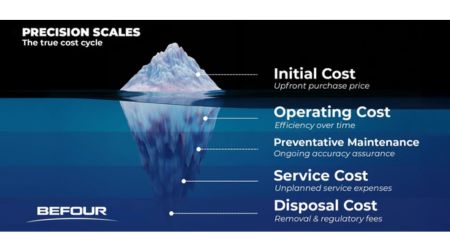
April 23, 2026- When healthcare providers evaluate scales, the conversation often starts — and ends — with purchase price. This is especially true in large RFPs, where high volumes and tight budgets can push decisions toward the lowest upfront cost. But focusing only on the sticker price overlooks a much bigger financial picture. Like most capital equipment, scales carry a full life cycle cost, and many of the most impactful expenses don’t appear until after the scale is in use.
For distributor reps, understanding total cost of ownership helps shift the conversation from price to value — and helps customers avoid unexpected costs.
Initial Cost: More Than the Sticker Price
The initial cost of a scale goes beyond the number on the quote. Assembly time, add-on features, and replacement parts can quickly add to the total. Befour scales arrive fully assembled or require minimal setup, saving staff time immediately. Key features such as active handrails, MotionLock® technology, and LB/KG lockout are included — not optional upgrades. Built with durable, USA-made materials, Befour scales are engineered for a life expectancy of up to 20 years, positioning them as a long-term investment rather than a disposable purchase.
Operating Cost: Designed for Efficiency
Operating costs often show up as lost time. Complicated interfaces, inconsistent displays, and slow readings can disrupt workflows. Befour uses the same simple, seven-button display console across its scale portfolio, reducing training time and eliminating retraining as staff move between departments. Faster, more accurate readings — especially for unsteady patients — mean clinicians spend less time reweighing and more time on patient care.
Continue Reading in the latest issue of Repertoire Magazine.