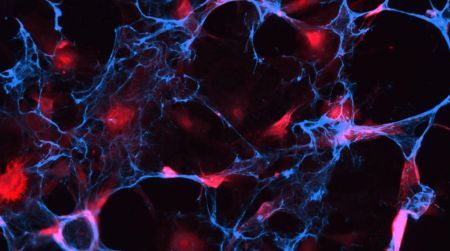
October 29, 2025- When it comes to treating disease, one promising avenue is addressing the presence of senescent cells, according to Mayo Clinic. These cells — also known as “zombie cells” — stop dividing but don’t die off as cells typically do. They turn up in numerous diseases, including cancer and Alzheimer’s disease, and in the process of aging. While potential treatments aim to remove or repair the cells, one hurdle has been finding a way to identify them among healthy cells in living tissue.
In the journal Aging Cell, Mayo Clinic researchers report finding a new technique to tag senescent cells. The team used molecules known as “aptamers” — small segments of synthetic DNA that fold into three-dimensional shapes. Aptamers have the ability to attach themselves to proteins on the surfaces of cells. In mouse cells, the team found several rare aptamers, identified from among more than 100 trillion random DNA sequences, that can latch onto specific cell surface proteins and flag senescent cells.