Maintaining overall health helps protect the kidneys.
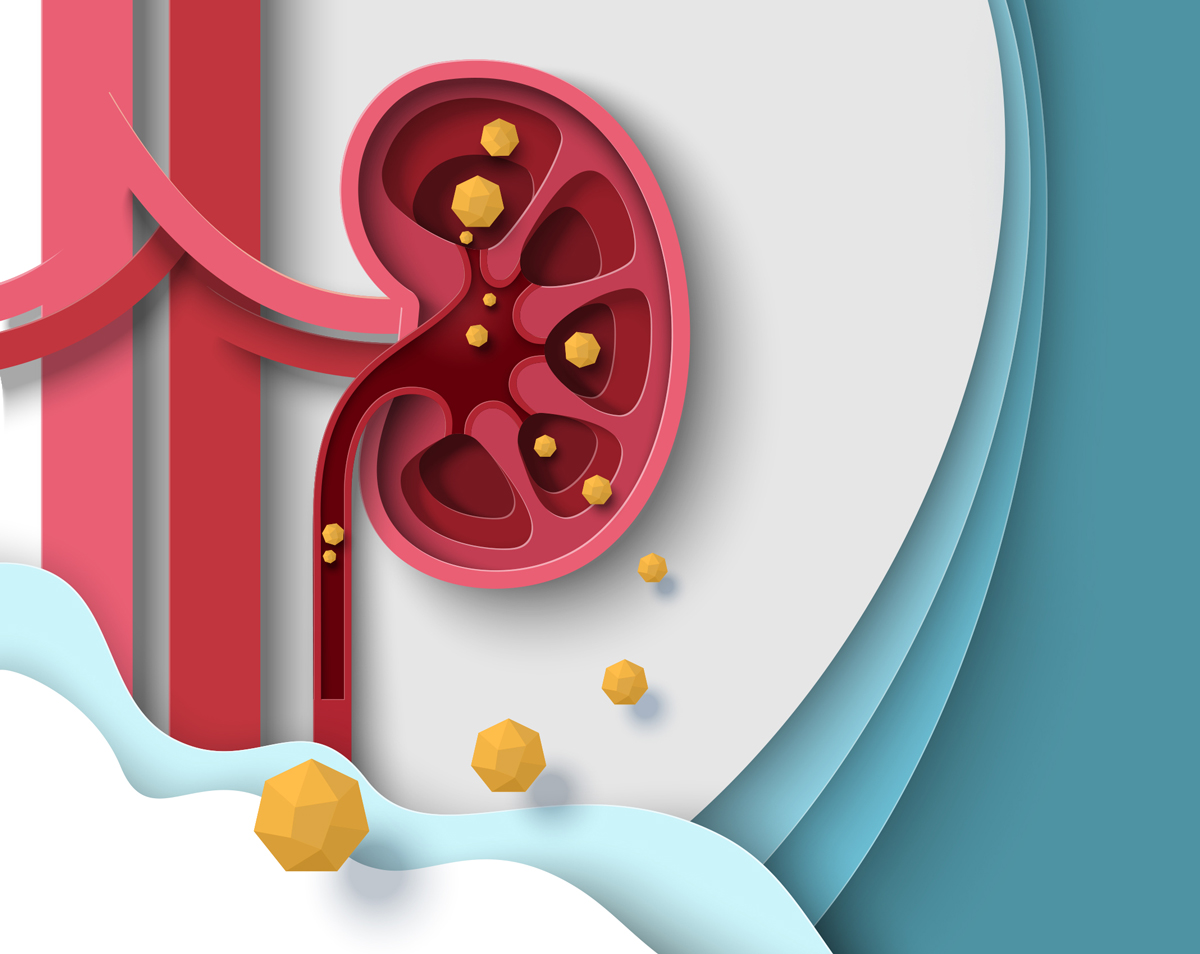
The kidneys act as the one of the body’s primary filters of waste, performing crucial functions to maintain internal balance – yet, more than one in seven adults in the U.S. has chronic kidney disease (CKD), according to the Centers for Disease Control and Prevention (CDC).
Kidney disease is a major public health concern. There are usually no noticeable symptoms in early kidney disease, and the illness often goes undetected until it is very advanced. In fact, about 90% of adults with CKD do not know they have it, according to the National Kidney Foundation.
For this reason, understanding the measures that can be taken to prevent kidney disease is essential to keeping the kidneys functioning properly and to avoid kidney disease.
“No matter what clinical environment you’re in, physicians and healthcare professionals must also recognize and understand good kidney medicine,” said Suzanne Watnick, MD, FASN, ASN Health Policy Scholar and Chair of Policy and Advocacy Committee. “Health systems in general must also have access to proper kidney care so that patients can have access to the treatment that they deserve.”
Dr. Watnick is a Professor of Medicine in the Division of Nephrology at the University of Washington and currently practices in the VA Puget Sound Health Care System in Seattle. She serves on the Quality Committee and Chairs the Policy and Advocacy Committee of the American Society of Nephrology and is a member of its Home Dialysis Task Force.
“The American Society of Nephrology’s mission is to create a world without kidney diseases, as well as to educate the medical community, drive breakthroughs and innovation and advocate for policies that create changes in kidney medicine and kidney care throughout the world,” said Dr. Watnick.
Prioritizing kidney health
Most people are born with two kidneys, located in the body on either side of the spine, just below the rib cage.
Inside the kidneys are many small components called nephrons which help filter and clean the blood. Once the kidneys filter the blood, it is sent back into the body, and any waste material is moved to the bladder as urine. About every 30 minutes, the kidneys filter all the blood in the body.
Healthy kidneys, according to NKF, automatically remove waste products and extra water from the body, help maintain blood pressure, keep the bones healthy, help make red blood cells and balance important minerals.
Possible signs and symptoms of kidney disease, however, include fatigue, difficult urination, dark or foamy urine, decreased concentration, swollen abdomen, ankles and feet and more.
“There are various stages of chronic kidney diseases. You can have early disease through stages 1 through 5, where you are at the point where you need dialysis or a kidney transplant to survive.”
Patients diagnosed with kidney disease should focus on lowering their blood pressure, managing blood sugar levels, reducing salt intake, avoiding NSAID painkillers and moderating protein consumption.
For the rest of the population, maintaining healthy kidneys starts with making healthy food choices, introducing physical activity, aiming for a healthy weight, getting enough sleep, stopping smoking, limiting alcohol intake, reducing stress and managing diabetes, high blood pressure and heart disease, according to the National Institute of Diabetes and Digestive and Kidney Diseases (NIDDK).
“Good kidney health is part of overall good health – to maintain good kidney health you need to have a healthy diet, exercise, drinking enough water (follow your thirst) and lead a generally healthy lifestyle,” said Dr. Watnick.
Research and innovation
When kidney disease enters its advanced stages, patients may require intensive treatments such as dialysis or a kidney transplant.
Since kidney disease may not have symptoms early on, regular testing – at least once per year for people with known risk factors or symptoms, such as high blood pressure or diabetes – can detect changes in kidney function early on.
The two most common causes of advanced kidney disease are diabetes and hypertension, says Dr. Watnick.
Patients are also more likely to develop kidney disease if they have heart disease or a family history of heart failure, according to NIDDK.
“Half of all people starting dialysis are starting because of diabetic kidney disease, and then another quarter are starting because of high blood pressure related kidney disease,” said Dr. Watnick. “Other causes include rarer kidney diseases, genetic abnormalities and anatomic abnormalities, which account for another 20 percent of kidney diseases.”
The typical way to diagnose kidney disease is through both blood and urine tests. Physicians can help high risk patients
determine the recommended tests and screenings for their specific condition.
“There is no current United States Preventative Services Task Force (USPSTF) recommendation for general screening of the population at large, but there is recommended screening for certain subgroups of people,” said Dr. Watnick. “Patients with high blood pressure or type 1 or 2 diabetes should be screened regularly for kidney disease.”
Advancements in medication have helped patients manage kidney disease by controlling blood pressure, reducing swelling, balancing minerals, lowering cholesterol and addressing other related issues.
“In the last several years there has been innovation in nephrology where there has been a lot of stagnation in the past,” said Dr. Watnick. “For the earlier stages of kidney disease, prior to dialysis, we now know that certain medications, such as SGLT-2 inhibitors and GLP-1 agonists, have been shown to slow down the progression of kidney disease and improve survival in people with kidney disease. There has also been a lot of traction in our field in research on some of the rarer kidney diseases and diseases of the kidney filters.”
Prioritizing one’s overall health is ultimately the best way to manage kidney disease and address kidney health.
“It is important to focus on a heart healthy lifestyle and to get screened by your primary care provider for regular diseases,” said Dr. Watnick. “If you are one of the one in seven U.S. adults with kidney disease, make sure to follow up regularly with your primary care provider or kidney doctor – we now have new therapies that can slow down the progression of kidney diseases and there are a lot of new things coming down the pipeline to potentially result in cures.”
Celebrating transformative work in kidney health
This year marks 75 years of the National Kidney Foundation’s (NKF) transformative work in kidney health, advocacy, research, education, and patient support. Founded in 1950 by a determined mother who challenged the status quo to help her son, NKF has grown into a leading voice in kidney care nationwide.
Over the decades, NKF has driven major advancements, including contributing to the Medicare End-Stage Renal Disease Benefit, which expanded federal coverage for Americans with kidney failure, and helping establish standards like the KDOQI® Clinical Practice Guidelines that have shaped care. The Foundation also played key roles in organ donation awareness and advancing more equitable diagnostic tools, such as the race-free eGFR equation developed with the American Society of Nephrology.
Now through its “75+You” campaign, NKF aims to impact 75 million lives by 2030 across three strategic pillars: preventing the preventable, enabling patients to live the life they want, and ensuring access to transplants for all. Initiatives include doubling awareness and early testing, expanding home dialysis access, and increasing both living and deceased kidney donations.
During National Kidney Month, NKF encourages people to take the Kidney Risk Quiz, become advocates, or support efforts to revolutionize kidney care and improve outcomes for millions.
For more information, visit: www.kidney.org.