Sponsored – Aspen Surgical
How Aspen Surgical’s North American manufacturing model strengthens resilience, quality, and clinical trust in a volatile global supply chain environment.
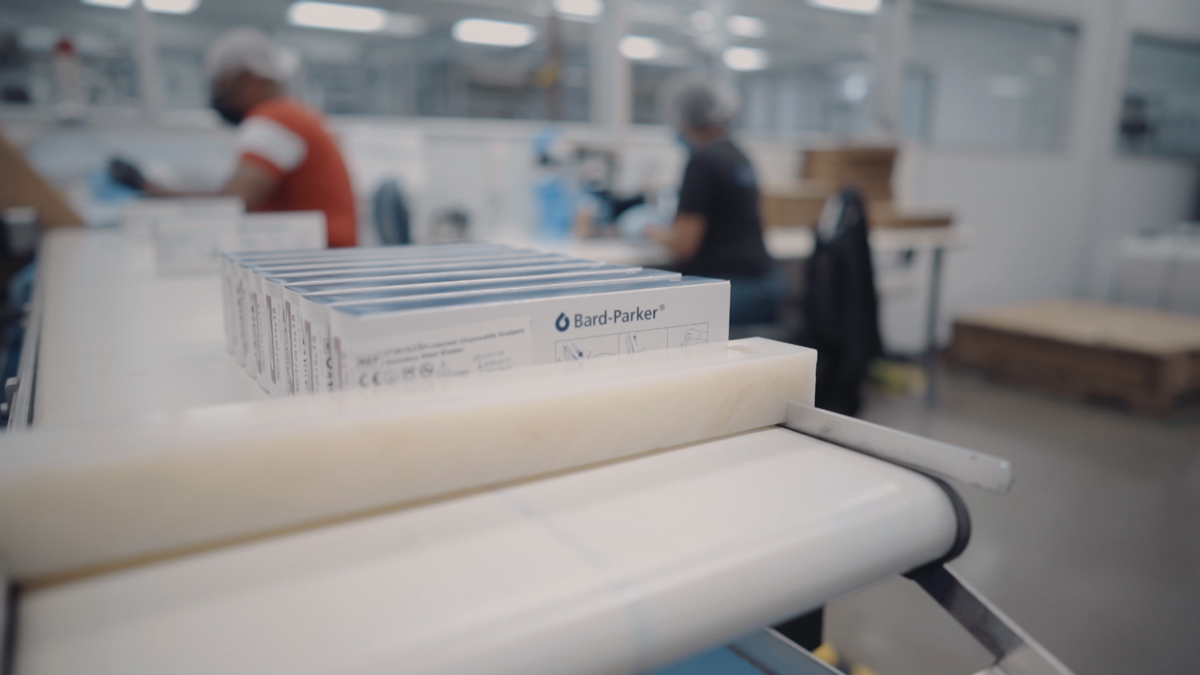
In an era defined by supply chain disruption, labor shortages, and rising pressure on global manufacturing networks, the question of where – and how – medical products are made has become central to industry resilience. Few companies illustrate the “Made in America” manufacturing conversation as clearly as Aspen Surgical, which has doubled down on a vertically integrated, North American-based production model to maintain stability and quality in a volatile environment.
At the center of Aspen Surgical’s strategy is a structured footprint anchored in Caledonia, Michigan, complemented by additional U.S. manufacturing in Las Piedras, Puerto Rico, and nearshore operations in Agua Prieta, Mexico. The company also extends its global reach with instrumentation manufacturing in Tuttlingen, Germany, and commercial and distribution operations in Melbourne, Australia – allowing it to stay close to customers while retaining end-to-end control of critical processes, from injection molding and blade stamping to assembly and packaging.
That localized control proved valuable when global supply chains buckled, enabling Aspen Surgical to maintain service levels without sacrificing quality or growth. In 2023, the company reinforced its long-term commitment with a $5 million investment to expand its Caledonia headquarters, consolidating distribution operations, adding 131,000 square feet of capacity, and creating up to 75 manufacturing and distribution jobs in West Michigan.
At the core of Aspen Surgical’s approach to product development is a disciplined principle: design begins at the point of care. The company builds its innovation pipeline around input from OR nurses, surgeons, scrub techs, and perioperative teams who rely on these products every day. Their feedback consistently centers on practicality – tools that perform reliably, protective equipment that maintains dexterity, and solutions that streamline workflows without compromising outcomes.
That philosophy shapes a balance between innovation and utility. Aspen Surgical does not pursue novelty for its own sake. Instead, its portfolio – which supports the patient’s entire perioperative care journey, including single-use essentials, sophisticated equipment and trusted brands like Bookwalter®, Bard-Parker®, and Precept® – reflects a commitment to repeatable performance in real clinical settings. Each product is measured against a straightforward standard: does it improve safety, efficiency, or both?
By producing close to U.S. healthcare supply chains, Aspen Surgical is able to iterate more quickly, maintain tighter quality control, and ensure a reliable flow of critical products. That proximity allows innovation to be refined in real time, guided by clinicians rather than abstract design cycles.
Beyond product design, Aspen Surgical also sees its presence as tied to community impact. Since its founding in 1999 in Caledonia, Michigan, the company has remained anchored in West Michigan, supporting a skilled manufacturing base that benefits both local families and the broader healthcare supply chain.