By Pete Mercer
Mark Van Sumeren’s latest book examines how business leaders can harness AI without surrendering professional judgment, ethics or accountability
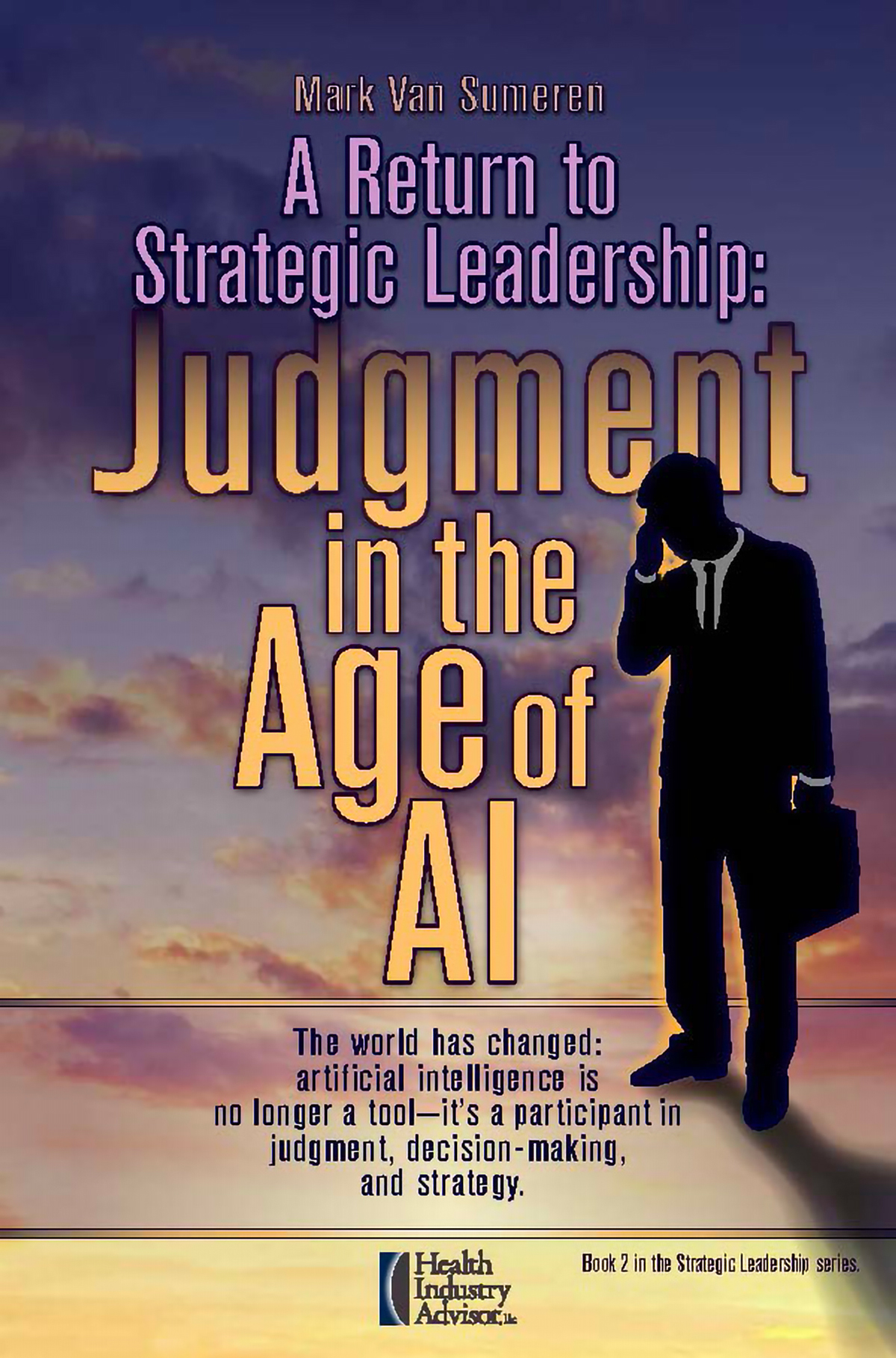
Artificial intelligence (AI) is here. Over the last few years, we have seen it explode from a conceptual idea to a widely used and applicated tool, with varying degrees of success. Sure, it’s not perfect – but it is prevalent, and people are using it to make important decisions, often at an alarming rate. The ability to make strategic decisions is integral to being a leader, and it’s even more important to discern the best way to build a strategy in today’s market.
Leaders are at a crossroads where they must decide whether or not they’re going to adopt artificial intelligence, and then they must decide where artificial intelligence is going to be implemented and how much the team is expected to rely on it. Setting those parameters from the outset of this journey is critical, giving your team a very clear understanding of how it’s going to be used and why.
Repertoire Magazine sat down with Mark Van Sumeren to discuss his newest book, “A Return to Strategic Leadership: Judgment in the Age of AI”, how the growth of artificial intelligence is going to impact business leadership and what strategy looks like in the face of AI.
Creating fiction from fact
“A Return to Strategic Leadership” is a fictional business novel that looks at the all-too-real world scenarios that business leaders are facing with artificial intelligence today. It follows retired Bill Ellis, a former executive in the medical device manufacturing business, as he grapples with business decisions where artificial intelligence points one way, while his years of experience and sense of ethical responsibility point another.
This book is the second in a series of business novels where Van Sumeren is using his lived experience to craft narratives around real-life business challenges and what it looks like to navigate those as a business leader.
After writing the first book, “A ‘Trip’ to Strategic Leadership”, wherein Bill Ellis goes on a self-awakening journey to learn about his shortcomings as a leader and how that ultimately impacts his business and employees, Van Sumeren didn’t immediately have a topic he wanted to cover in the second book. Once artificial intelligence started to become widely accepted and applied in business settings, though, he began to develop the next steps in Bill Ellis’ journey.
He said, “Just from watching how artificial intelligence went from hype and conceptual to reality this year, bringing with it a lot of anxiety, consternation and uncertainty, I began to develop an idea. I thought that now was the time to write about it, so I had a topic for my second book.”
With this book, Van Sumeren is hoping to give business leaders a roadmap on how to navigate and even use artificial intelligence to build business strategies. While the use of artificial intelligence is pretty divisive, there are ways to apply it to business decisions without compromising any ethical boundaries or replacing the human element.
It’s all about challenging and checking the information that the artificial intelligence provides. Van Sumeren said, “Think of the algorithm as a very smart analyst that has several years of experience – despite that experience, you’re not going to just accept what it has to say on face value. You have to test it, probe it, challenge it, rework it, send them back to do it again because of things that they’ve missed, and then come back with the right answer. It’s no different than what you’ve been doing; it’s just faster.”
Leveraging AI as a strategic tool
Building a strategy is a crucial part of the business leader’s journey – it’s rarely easy to get it right, but a good strategy can make a significant difference for how an organization operates. When it comes to artificial intelligence, it’s important to remember that while it can be used as a tool to improve efficiency and productivity, it also carries a certain amount of risk. Certain people are afraid of losing their livelihoods to artificial intelligence, while others, Van Sumeren included, are concerned about how artificial intelligence is being used ethically.
“My biggest fear is not that it’s taking people’s jobs, because I think it can do some things to save time,” he said. “But to get real value out of it, there’s a higher order of activity that needs to be applied to it that can actually increase the skill demands for the people that are using it right. If you’re using it to accomplish a task, but you’re not applying professional judgement to it, it’s going to take you down a path that is wrong and inappropriate.”
One of the ideas he uses in the book is that “technology amplifies everything, including the character of the people using it.” This idea that technology can positively or negatively impact people is compelling, especially for a novel. Van Sumeren said, “In the wrong hands, AI can really do damage. If we apply filters of human morality and ethics it can be effective, but if we leave that filter off, it can do a lot of damage.”
For those who are looking to fold artificial intelligence into their decision-making and strategy building processes, it’s important to take it slow at first. Van Sumeren said, “I see a lot of people getting their toes in the water, trying to understand it and getting familiar with it first. From there, they can do some lower-level tactical things with it, as opposed to bigger picture stuff.”
For those already well into their journey, Van Sumeren advocates four key pillars to successful AI adoption:
- Curated data – building the AI on information of the highest quality, rather than internet scrapping of questionable data
- Probing questions – precise questions that sharpen the inquiry
- Ethical oversight – values that put guardrails on its use
and application - Professional judgment – the expertise needed to turn the output into meaningful decisions.
In his book, Van Sumeren wrote: “Machines accelerate thought; only humans ensure that thought means something.”
About Mark Van Sumeren

Mark Van Sumeren has devoted his nearly forty-year career to listening to and advising healthcare leaders, as they tackle the challenges of an ever-changing industry. His work has helped senior leadership teams make sense of market dynamics; define and strengthen competitive advantages; secure organic and inorganic growth; and, shape corporate strategy. Mark’s clients have included executives and directors of hospitals, health systems, medical device manufacturers and service providers, ranging from $1M to $9B in annual sales.
Mark currently serves in retained advisory and governance roles with selective, growth-oriented health care services companies. His passion is to bring a broad industry perspective and strong strategic insights, to enhance organizational performance. Mark’s mission is to encourage profitable growth for those companies that he serves.
When not addressing business issues, Mark spends his time following his favorite teams – University of Michigan football, Detriot Tigers baseball, Green Bay Packers, as well as in joining his wife of 34 years, Kate, in spoiling their three grandchildren.